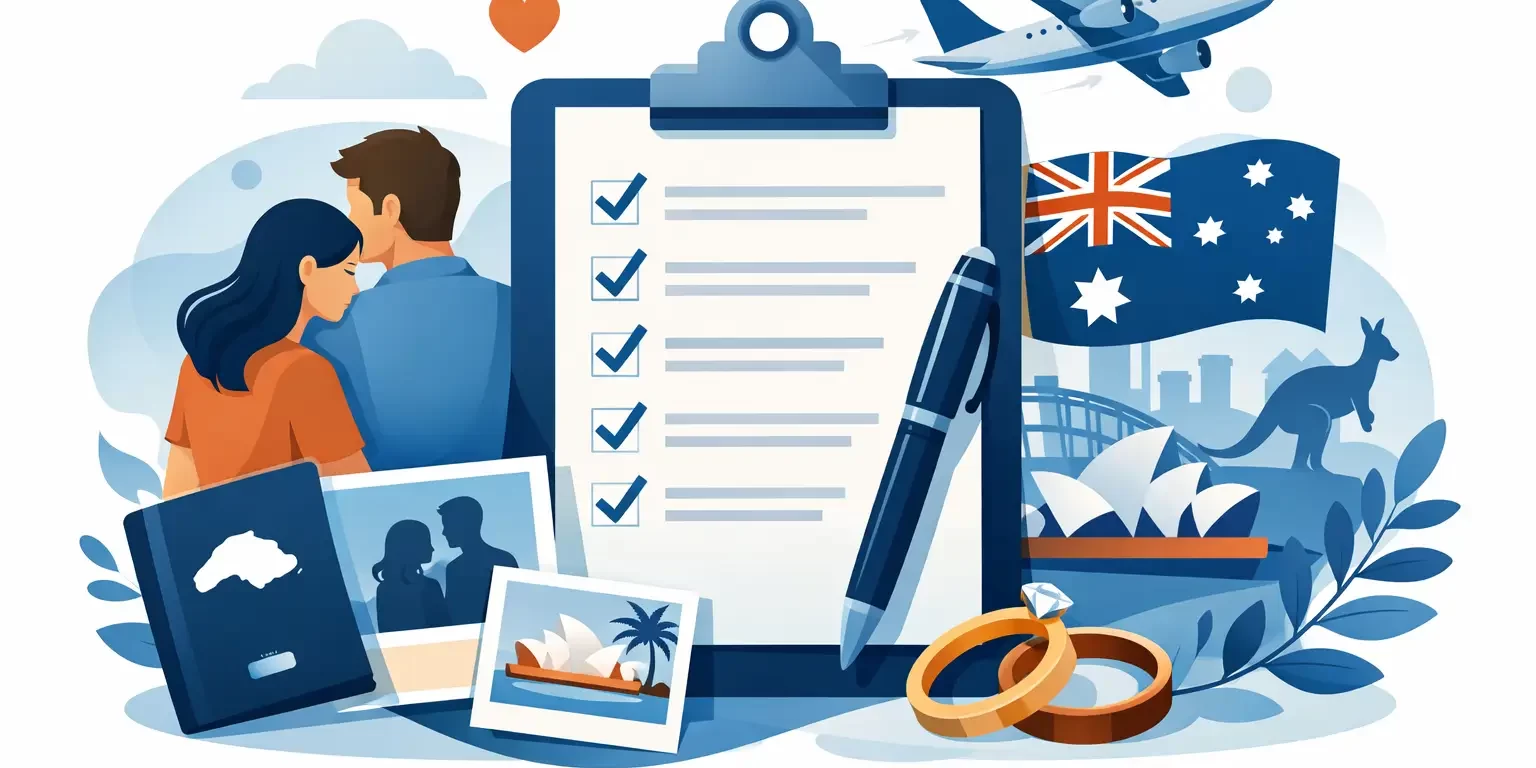
A partner visa refusal rarely happens because a couple forgot the relationship was real. More often, it happens because the evidence did not do its job. A strong partner visa Australia document checklist is not just a pile of paperwork – it is a legal strategy that shows the Department exactly who you are, how your relationship works, and why it meets the criteria.
That distinction matters. Partner visa applications are document-heavy, closely assessed, and often delayed when evidence is incomplete, inconsistent or poorly organised. If you are applying onshore or offshore, the checklist is not only about what to include. It is about what each document proves, how recent it is, and whether the overall picture makes sense.
Why a partner visa Australia document checklist matters
Australian partner visa cases are assessed on evidence, not assumptions. Case officers are not there to fill in the gaps or interpret a weak application in the most generous way. If your documents are thin, contradictory or scattered across different dates and names, that creates risk.
A proper checklist helps you control that risk early. It lets you identify missing evidence before lodgement, deal with practical issues such as overseas documents and certified copies, and avoid the common mistake of relying too heavily on photos and chat logs while neglecting stronger relationship material.
This is especially important for couples with more complex facts. Long-distance relationships, short periods of living together, previous marriages, children from earlier relationships, sponsor history, or visa status issues can all change what evidence should be prioritised.
Core identity documents
Every partner visa application starts with identity. If the basic identity documents are unclear, everything that follows becomes harder.
The applicant will usually need a current passport bio page, birth certificate, national identity document if available, and passport-sized photographs. If the applicant has changed their name, documents supporting that change should also be included, such as a marriage certificate or legal name change record.
The sponsor also needs identity documents, usually including their passport, birth certificate, and evidence of Australian citizenship or permanent residence. If the sponsor is an eligible New Zealand citizen, documents proving that status are also required.
Where documents are not in English, accredited translations are generally needed. If names appear differently across passports, birth certificates, bank records or leases, that should be addressed carefully rather than ignored. Small inconsistencies can trigger unnecessary questions.
Relationship evidence for a partner visa Australia document checklist
This is the heart of the application. The Department wants evidence across the recognised relationship factors, not just emotional statements.
Financial aspects
You should gather records showing how your financial lives intersect. Joint bank accounts can help, but they are not the only useful documents. Shared bills, rent payments, joint loans, money transfers for shared living costs, beneficiary nominations, superannuation nominations, and evidence of one partner supporting the other can all be relevant.
That said, financial evidence depends on your circumstances. Some couples keep finances partly separate for cultural, practical or personal reasons. If that applies, the application should explain it clearly and support the relationship with stronger evidence in other areas.
Nature of the household
This area looks at how you live together and share domestic life. Lease agreements, mortgage documents, utility accounts, mail addressed to the same residence, household purchase receipts, and statements explaining day-to-day living arrangements are often useful.
If you have lived apart for genuine reasons such as work, study, travel restrictions or family commitments, do not leave that unexplained. Periods of separation are not automatically fatal, but they need context and supporting evidence.
Social aspects
The Department also considers whether other people know about your relationship. This can include photos over time, travel bookings, invitations, messages from family, joint event attendance, and evidence that you present publicly as a couple.
Be selective. Fifty well-chosen photos spanning the relationship are usually better than 400 screenshots with no explanation. Quality beats volume when the evidence is properly dated and contextualised.
Nature of commitment
This is where many applications become too vague. Commitment is shown through plans, consistency and intent. Evidence might include statements about your future together, joint travel plans, wills, long-term housing arrangements, messages showing ongoing contact during separation, and proof that you have supported each other through major life events.
The Department is looking for a genuine, continuing relationship. Documents should show more than romance. They should show partnership.
Form 888 and personal statements
Form 888 is often underestimated. These witness statements can be highly persuasive when they come from people who genuinely know the relationship and can speak to its development over time.
Choose witnesses carefully. Friends or relatives who have actually observed your relationship are far more useful than people making generic comments. Their statements should be specific, consistent and realistic. A short, credible declaration usually carries more weight than a dramatic one.
Your own relationship statements matter just as much. Each partner should explain how the relationship began, how it developed, key dates, living arrangements, periods of separation, future plans, and any unusual features of the relationship. If there are difficult facts, deal with them directly. A clear explanation is always better than silence.
Character, health and background documents
A complete checklist goes beyond proving the relationship. Applicants also need to satisfy health and character requirements.
Police clearances are commonly required from Australia and from overseas countries where the applicant has spent enough time. Timing matters here, because some certificates can expire or take longer to obtain than expected.
Health examinations may be requested as part of the process. Depending on the case, there may also be requests for military records, court documents, divorce orders, custody documents for children, or sponsor-related declarations and history forms.
If either partner has had previous visa issues, criminal matters, past sponsorships or prior marriages, those records need to be prepared carefully. These are not side issues. In some applications, they shape the entire risk profile.
Common checklist mistakes that cause delays
The biggest mistake is treating the partner visa like a standard form-filling exercise. It is not. The Department assesses the whole picture, and weak preparation shows.
Another common problem is overloading the application with repetitive evidence while missing the essentials. Hundreds of chat screenshots do not replace a lease, joint financial records or a proper explanation of living arrangements.
Poor chronology is another issue. If dates do not line up across statements, travel records and household documents, the application can look less credible than it really is. The same goes for inconsistent addresses, undeclared previous relationships, or documents uploaded without labels.
Couples also run into trouble by lodging too early. If key evidence is still missing, or if the relationship has only limited documented history, waiting briefly and preparing properly can sometimes be the stronger move. It depends on your visa status, deadlines and eligibility, so timing needs to be handled strategically.
How to organise your evidence properly
A good checklist is only useful if the documents are presented well. Group evidence by category, keep file names clear, and make sure dates are visible wherever possible. If a document needs explanation, provide it.
It also helps to think like a decision-maker. If someone unfamiliar with your relationship read the file from start to finish, would the evidence tell a consistent story? Would they understand who lived where, when the relationship became serious, how finances were shared, and why the relationship is ongoing?
That is where experienced migration support can make a real difference. In a strong application, every document has a purpose. At BMS Global, that is how partner visa matters are approached – not as a document dump, but as a case built to withstand scrutiny.
What your checklist should really achieve
The best partner visa applications do not simply tick boxes. They reduce doubt. They answer questions before the Department asks them. And they show that the relationship is genuine in a way that is structured, credible and legally persuasive.
If your case is straightforward, a disciplined checklist can save months of frustration. If your case is complicated, the right evidence strategy can be the difference between a grant and a refusal. Either way, your paperwork should work as hard as you do. When your future in Australia is on the line, close enough is not good enough.